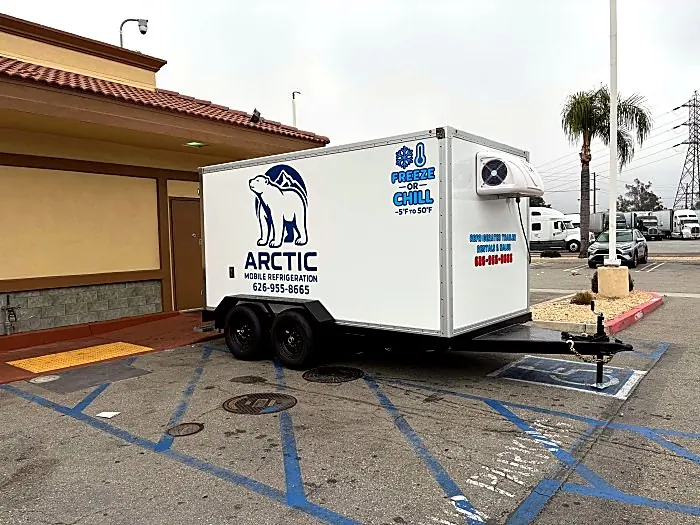
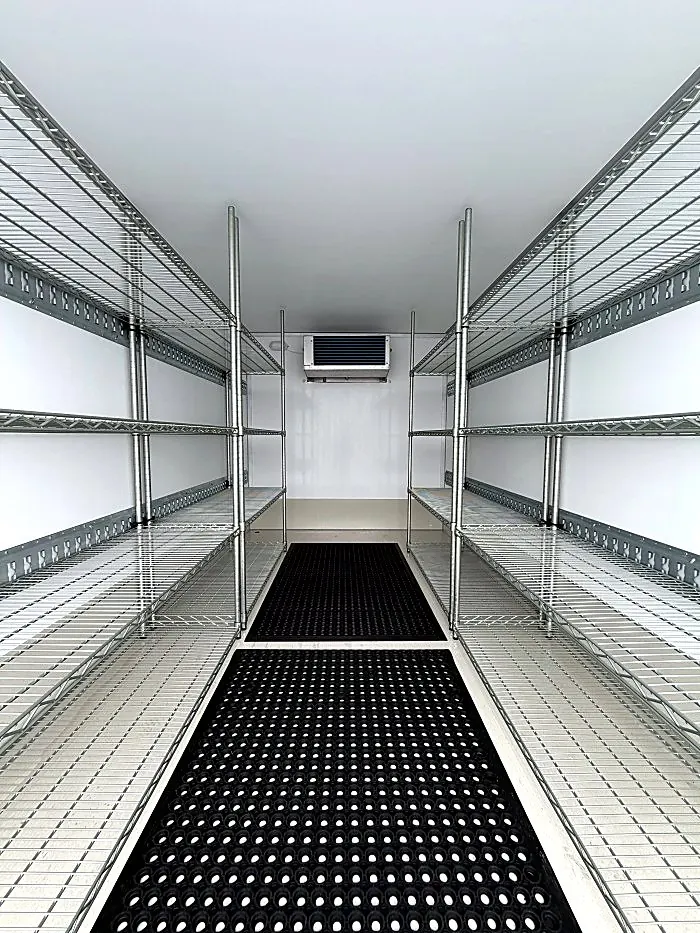
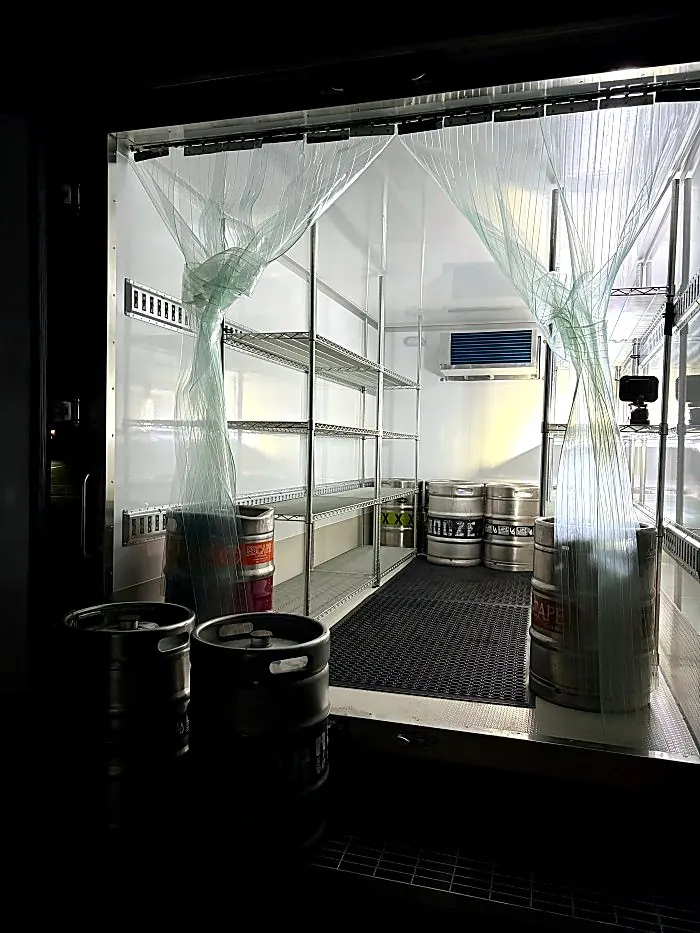
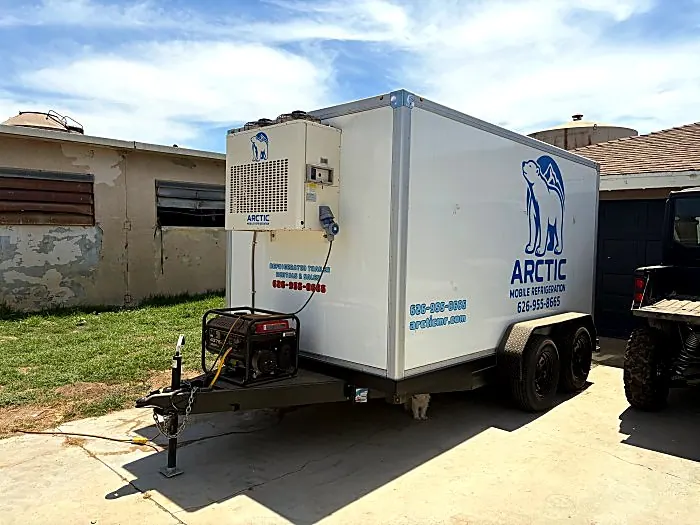
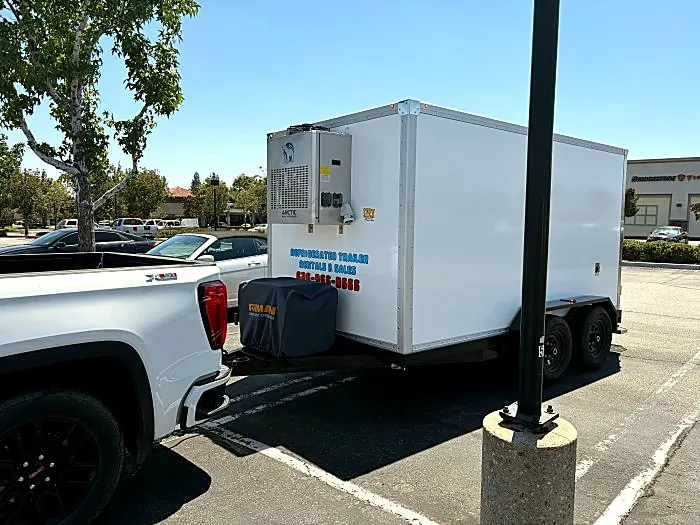
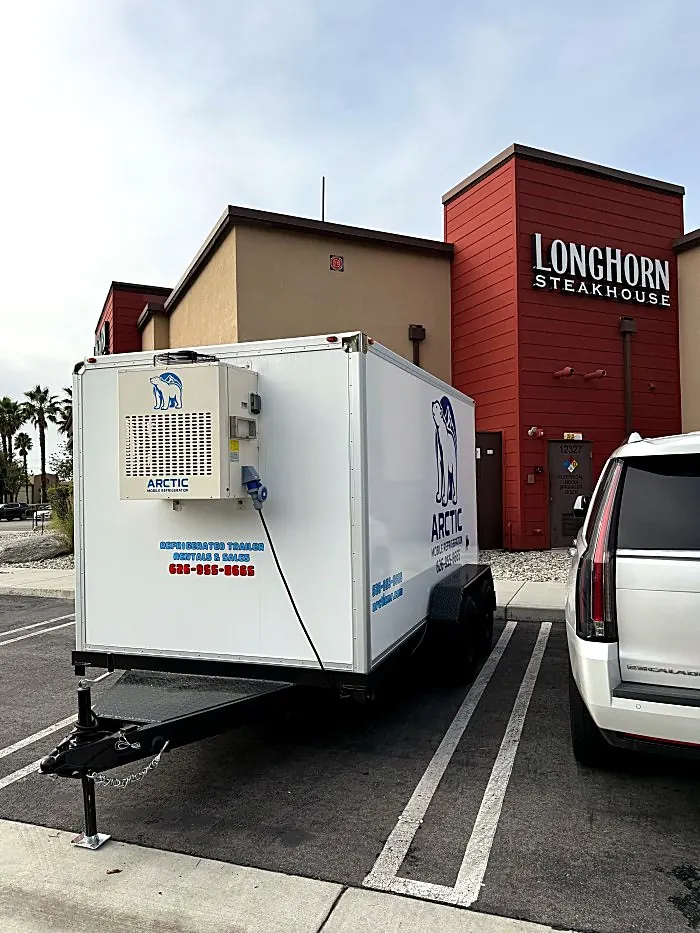
Choose Your Model
Both models include professional-grade refrigeration, commercial insulation, and DOT compliance.
🔥 POPULAR
7×12 Refrigerated Trailer
Perfect for Tight Spaces & Mid-Volume Needs
- • Temperature: –10°F to 50°F
- • Compact footprint (fits standard parking)
- • Dual-axle with electric brakes
- • 115V / 20A standard power
- • Commercial-grade insulation (4"+ walls)
- • Interior LED lighting
- • DOT compliant & road-ready
🎯 Best for:
Restaurants, medical storage, florists, small catering, food trucks
See the full 7×12 walkthrough →
7×16 Refrigerated Trailer
Maximum Capacity for High-Volume Operations
- • Temperature: –10°F to 50°F
- • 33% more storage than 7×12
- • Heavy-duty dual-axle construction
- • 115V / 20A standard power
- • Commercial-grade insulation (4"+ walls)
- • Interior LED lighting
- • DOT compliant & road-ready
🎯 Best for:
Large catering, warehouses, distributors, event companies, high-volume operations
See the full 7×16 walkthrough →
Why Purchase from ArcticMR?
We don't just sell trailers—we deliver proven cold storage solutions backed by real-world experience.
✅
Battle-Tested Equipment
Same commercial-grade units we trust in our rental fleet. Proven performance under real conditions.
📞
Expert Support
Professional guidance throughout your purchase. We know these units inside out and provide ongoing support.
🛡️
3-Year Warranty
Year 1: Full parts + labor. Years 2-3: Parts coverage. Plus 5-year structural warranty. Peace of mind included.
Buy or Rent: How to Decide
The honest answer depends on three numbers, not on how much you like the
trailer.
Days per year
If you need cold storage a few weeks a year, renting wins almost every time. Ownership carries
registration, insurance, tires, brake service and refrigeration maintenance whether the trailer
moves or not. Somewhere past roughly 150 days a year, the arithmetic starts to favour owning
— but the crossover is different for every operation, and it is worth running the numbers
rather than guessing.
Where it will sit
An owned trailer needs a home. Many Southern California cities restrict commercial trailer
parking on residential property, and industrial landlords often prohibit it in the lease. If you
do not control a yard, bay or side lot, that constraint matters more than the purchase price.
Who services it
A rental includes the refrigeration unit, the power cable, the shelving and the maintenance
behind them. Buying means you own that responsibility — including the service call on a
Saturday when the unit will not hold setpoint. Neither answer is wrong; they are different
trades.
What Comes With a Purchase
The same commercial-grade build we run in the rental fleet, not a stripped
version of it.
Both models are built on the same platform: a dual-axle trailer with electric brakes, four-inch
commercial insulation panels, a self-contained refrigeration unit holding −10°F to
50°F, and a 115V / 20A power requirement that most commercial buildings already meet. They
arrive DOT compliant and road-ready, which means they can be towed behind a properly equipped
half-ton pickup rather than requiring a commercial haul.
Inside, you get aluminum walls and ceiling, interior LED lighting, and a shelving package. The
floor is rated for pallet jacks and hand trucks. Rear doors are full-height with a ramp, so
loading does not depend on a dock.
Custom dimensions are available on both models. If your operation needs a different length,
door configuration or interior fit-out, tell us the specification and we will quote it rather
than forcing you into the two stock sizes.
The First Week With a New Trailer
Four things that catch people out, none of them complicated.
Confirm the outlet first
The unit needs one dedicated 115V / 20A circuit on its own breaker. Not a shared circuit, and
not an extension cord run across a parking lot. Check the outlet before the trailer arrives,
because moving it afterwards is a second delivery.
Level it before loading
A trailer parked on a slope will not hold temperature evenly, and the doors will not seal
properly. Level it, chock the wheels, then load.
Let it pull down empty
Pulling an empty trailer from ambient to a frozen setpoint takes hours, not minutes. Start it the
day before you load if the product is already frozen — dropping warm product into a warm
box is how loads get lost.
Beyond that, the routine is simple: keep the door closed, leave air space around the load so the
evaporator can move air, and do not block the return air path along the floor. Most temperature
complaints we hear trace back to one of those three things rather than to the equipment.